Introduction
Today, many scientific questions in the fields of catalysis and environmental science require the development of new tools. The objective of the INTRAA group is thus to solve such scientific challenges by developing either
– new methods,
– new instruments,
– new coupling between existing techniques,
– or integrated aproaches …
– usw …
Research areas
The group activities are divided in the following main axes:
Axe 1: Microscopies, spectroscopies et advanced spectrometries, gathering technics and aproaches such as those of surface science (TEM, STM, XPS…), separation analysis (ATD or GC/MS…), and mass spectrometry,
Axe 2: Reaction thermodynamics, gathering the approaches based on the measurement of reaction energy and calorimetry,
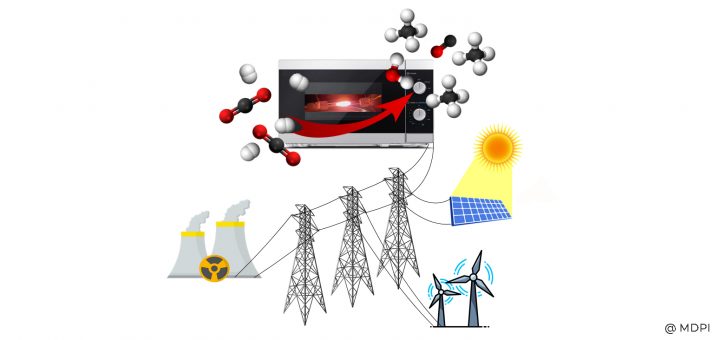
Axe 3: Catalysis in non-conventional media, gathering non-conventional methods for the synthesis of catalysts (ultrasounds, micro-waves), and studies of polarisation-induced or microwave-induced catalysis.
Staff
Researchers and University professors


Personnels techniques (en)

Postdoctoral fellows

PhD students


Interns
Publications
-
JOURNAL OF PHOTOCHEMISTRY AND PHOTOBIOLOGY A-CHEMISTRY, 2027, 482, p.
-
Edumujeze D., Devouge-Boyer C., Fournier-Salaun M., Leveneur S.
REACTION CHEMISTRY & ENGINEERING, 2026, p.
-
BULLETIN OF ENVIRONMENTAL CONTAMINATION AND TOXICOLOGY, 2026, 117(2), p.
-
WATER RESEARCH, 2026, 304, p.
-
Bahammou O., Bellouk H., El Mrabet I., Khalil F., Benzina M., Bouaziz J., Ferronato C., Meunier F., Váldes H., Zaitan H.
Environmental Science and Pollution Research, 2026, pp. -